
Futmak · الفتوحات المكية · Meccan Revelations

Al-Futūḥāt al-Makkiyya

Volumen del manuscrito 9 · Página 4

Manuscrito de Konya

Abrir fuente árabeAbrir traducción inglesa

Árabe

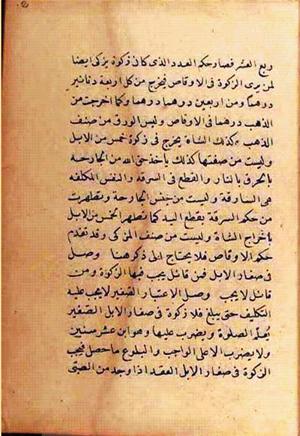
ربع العشر؛ فصار حكم العدد الذي كان زكاة يزكى أيضا، كمن يرى الزكاة في الأوقاص فيخرج من كل أربعة دنانير درهما، ومن أربعين درهما درهما.

وكما أخرجت من الذهب درهما في الأوقاص، وليس الورق من صنف الذهب، كذٰلك الشاة تخرج في زكاة خمس من الإبل[1]، وليست من صنفها.

كذٰلك يؤخذ حق الله من الجارحة بالحرق بالنار والقطع في السرقة، والنفس المكلفة هي السارقة، وليست من جنس الجارحة؛ وتطهرت من حكم السرقة بقطع اليد كما تطهر الخمس من الإبل بإخراج الشاة، وليست من صنف المزكى. وقد تقدم حكم الأوقاص، فلا يحتاج إلى ذكره هنا.

وصل في صغار الإبل

فمن قائل: تجب فيها الزكاة، ومن قائل: لا تجب.

وصل الاعتبار

الصغير لا يجب عليه التكليف حتى يبلغ، فلا زكاة في صغار الإبل.

والصغير يُعلَّم الصلاة ويُضرب عليها وهو ابن عشر سنين، ولا يضرب إلا على (ترك) واجب، والبلوغ ما حصل؛ فتجب الزكاة في صغار الإبل.

العقل إذن وجد من الصبي

Notas

[1]

(تنتقل المقابلة هنا من حكم الزكاة الظاهر إلى اعتبار المؤلف؛ فيجعل اختلاف جنس المخرج عن جنس المال نظيرا لاختلاف النفس المكلفة عن الجارحة.)
Inglés

one fortieth. The number that was itself almsgiving has thus become something on which almsgiving is due, as for one who holds almsgiving due on the amounts between thresholds, giving one dirham for every four dinars and one dirham for every forty dirhams.

Just as a dirham is given from gold on such an amount, though silver is not of the same kind as gold, so a sheep is given as almsgiving on five camels[1], though it is not of their kind.

Likewise, God’s right is taken from a bodily member by burning with fire or cutting off for theft, while the soul subject to obligation is the thief and is not of the bodily member’s kind. It is purified of the ruling of theft by cutting off the hand, just as the five camels are purified by giving a sheep, which is not of the kind of property purified. The ruling of the amounts between thresholds has already been discussed and need not be repeated here.

Continuation on Young Camels

Some hold that almsgiving is due on them, and others hold that it is not.

Continuation on the Inward Application

A child is not subject to obligation until maturity. Thus no almsgiving is due on young camels.

A child is taught prayer and is beaten for it at ten years old. Beating occurs only for omitting an obligation, though maturity has not occurred. Thus almsgiving is due on young camels.

Reason is therefore present in the child,

Notas

[1]

(The comparison moves from the outward ruling of almsgiving to the author’s inward application. The difference in kind between the payment and the wealth corresponds to the difference between the soul under obligation and the bodily member.)

Translator’s note TN2528-1: The text gives one sheep for five camels, one dirham for four dinars, and one dirham for forty dirhams. Awqāṣ are the intervals between specified thresholds. The examples concerning children map two different grounds for obligation onto the disagreement over young camels.

Imagen del manuscritoVolumen del manuscrito 9 · Página 4

El árabe y el inglés están enlazados por el mismo identificador de página de Konya. La distribución es aproximada; compruebe el manuscrito.

Referencia de la fuente de El Cairo

Ibn al-Arabi, The Meccan Revelations — Volumen del manuscrito 9 · Página 4 — https://www.futmak.com/espanol/konya/pages.php?id=2528&text=both