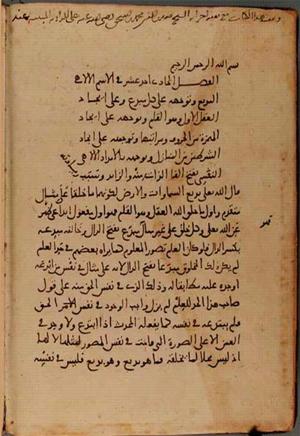
In the name of God, the All-Merciful, the Most Merciful.
Section Eleven: The Divine Name the Incomparable Originator, Its Turning toward Everything Originated without Precedent and toward Bringing into Existence the First Intellect, the Pen; Its Turning toward Bringing into Existence the Hamza among Letters and Its Ranks; Its Turning toward Bringing into Existence al-Sharṭayn among the Lunar Mansions; and Its Turning through Divine Succor Pertaining to Breath, with Fatḥah on the Fāʾ, Both Intrinsic and Additional, and the Cause of Its Increase
(Origination, Knowledge, and Form)
God, exalted is He, said, “Incomparable Originator of the heavens and earth” [al-Baqarah 2:117], because they were not created according to a preceding model. The first thing God created was intellect, the Pen, the first effect of incomparable origination appearing from Him. Every creation without a model is mubdaʿ, originated, with fatḥah on the dāl; its creator is its mubdiʿ, originator, with kasrah on the dāl.
Were knowledge the conception of the known, as some hold in defining knowledge, that creature would not be mubdaʿ, originated, for it would follow a model within the self of its originator, brought into existence corresponding to it. According to the proponent of this definition, that within the Real’s Self would have been necessarily existent there without beginning. He would not have originated it within Himself as an originated being does when originating. Nor would it exist concretely except according to the form standing within the Form-Giver’s Self for its likeness, not for it, since He is no locus for what He creates.
He would not be the Incomparable Originator, yet He is the Incomparable Originator. Within Himself there is therefore no
یادداشتها
Translator’s note TN5013-1: Mubdaʿ and mubdiʿ are «مُبدَع» and «مُبدِع»: the dāl vowel distinguishes what is originated from its originator. The argument about an inner model is conditional upon the definition the author rejects. The clause about the form “for its likeness, not for it” remains compressed in the supplied wording.